Grounded in Cairo Assembly Mobility Sessions (11 Dec 2022) and WHO EMRO 2022 Immunization & Mass-Gathering Findings.
1. Linking Points of Entry With Community Primary Care
The Eastern Mediterranean Region carries one of the highest burdens of cross-border displacement, labor migration, and annual religious mass gatherings globally. As highlighted in the 2022 regional director review, major pilgrimages such as the Hajj concluded without major public health incidents precisely because pre-travel immunization verification, point-of-entry screening, and hospital referral hubs operated within a unified primary-care architecture. Conversely, since 2020 more than 4.5 million additional children across the region missed routine single-dose vaccinations, creating acute measles, polio, and cholera susceptibility pockets whenever displaced families lacked zero-fee access to neighborhood clinics.
During the 11 December 2022 Cairo sessions on expanding UHC among refugees and migrants and reviewing COVID-19 PHC case studies, delegates demonstrated that parallel humanitarian clinics detached from national disease surveillance systems generate severe reporting lags. When paper registries at border transit centers are not linked to district epidemiological units, cluster signals take days to reach the IHR National Focal Point, violating the operational margin required under IHR Annex 2. Integrating community health workers from displaced neighborhoods directly into district EPHF teams resolves both trust barriers and reporting latency.
Cross-border corridors require standardized clinical handoff protocols across three physical rings: border health posts designated under IHR SPAR C12 (airports, seaports, and ground crossings), district primary care transit clinics serving displaced settlements, and regional reference laboratories capable of genomic or PCR confirmation. At ground crossings and reception centers, frontline nurses screen arriving travelers and displaced families for acute febrile rash, watery diarrhea, respiratory distress, and missed childhood immunizations while issuing portable vaccination records that remain valid at municipal clinics inland.
Crucially, Cairo delegates stressed that surveillance integration fails if health-seeking behavior is deterred by punitive immigration enforcement or catastrophic user fees. Countries that decoupled clinic registration from residency status during 2020-2022 achieved significantly higher measles and COVID-19 vaccine uptake among mobile populations and detected imported clusters before secondary community transmission established.
2. PoE-to-PHC Notification Latency Estimator
Test whether your corridor's clinic reporting channel, specimen transport time, and laboratory turnaround stay inside the 24-hour IHR Annex 2 assessment window.
Annex 2 Reporting Window Calculator
Satisfies IHR (2005) Article 6 24-hour National Focal Point assessment cycle from frontline PoE/PHC detection.
3. COVID-19 PHC Continuity & Post-Crisis Rebuilding
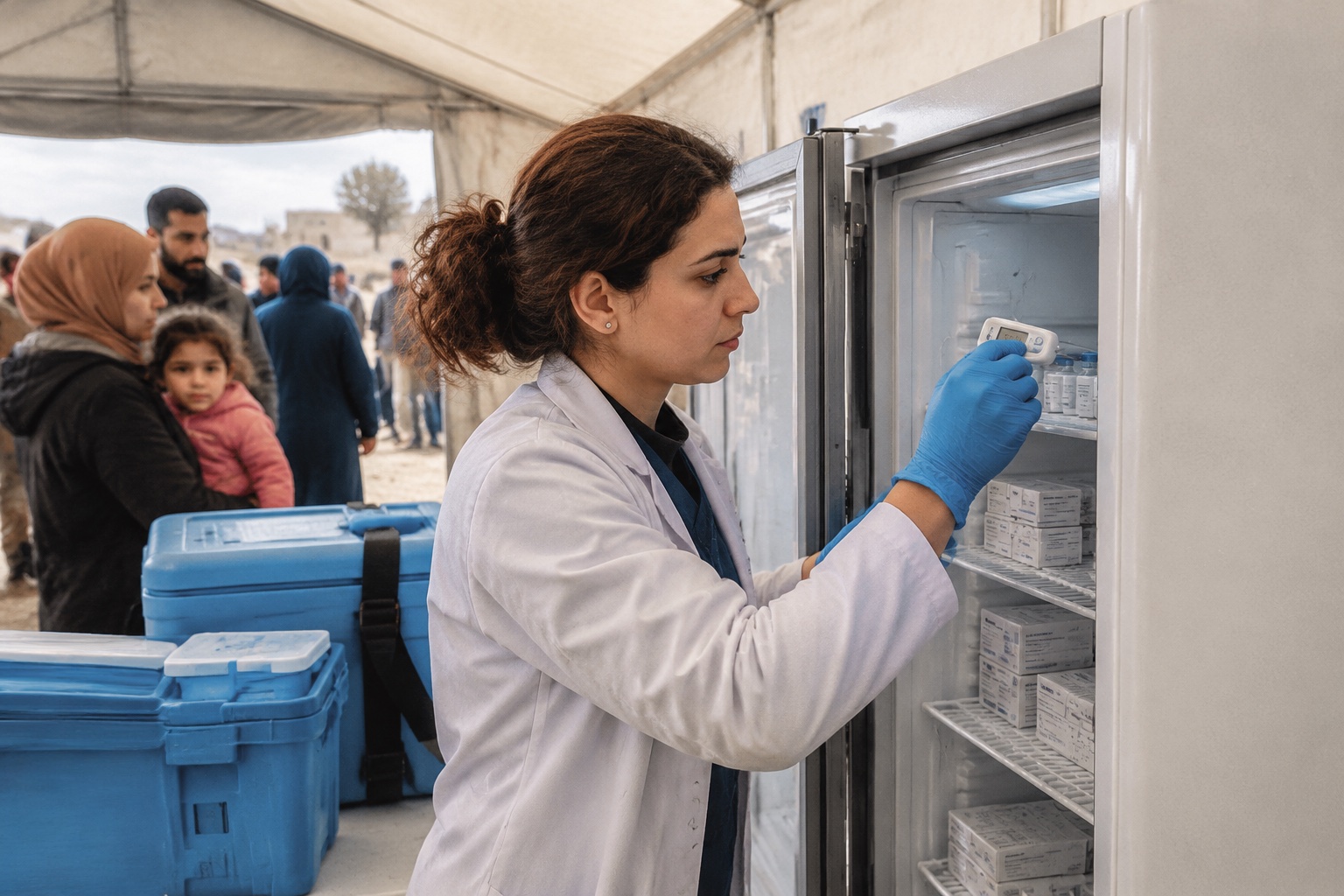
Comparative case studies presented on 11 December 2022 demonstrated that countries preserving primary-care tele-triage, multi-month NCD dispensing, and home-based pulse oximetry prevented secondary mortality spikes during pandemic waves. Health system rebuilding sessions further stressed that emergency donor funding must leave permanent laboratory couriers, solarized clinic cold chains, and interoperable civil-registration links rather than temporary tent infrastructure that vanishes once acute alerts subside.
| Corridor Function | Fragmented Silo Failure Mode | Integrated PHC-IHR Architecture | Verification Indicator |
|---|---|---|---|
| Migrant & Refugee Intake | Fear of user fees or legal exposure delays care-seeking | Zero-fee community clinic enrollment linked to UNHCR/national registry | >= 90% DTP3 Catch-Up |
| Point of Entry Screening | Paper logbooks detached from district epidemiological alerts | Direct digital relay from C12 PoE nurses to district RRTs | <= 24h Annex 2 Relay |
| COVID-19 & Acute Surge | PHC closures force chronic patients into crowded hospitals | Dual-track clinic zoning plus 90-day NCD refill buffers | Routine Visits >= 85% |
| Health System Rebuilding | Parallel NGO clinics collapse after emergency grants expire | Co-financed MoH infrastructure and solar cold-chain upgrades | EPHF Continuity Audit |
4. Frequently Asked Questions on Cross-Border PHC Surveillance
Why must refugee and migrant populations be included in routine primary health care for IHR security?
What is the IHR (2005) Article 6 notification timeline from detection to WHO assessment?
Historical Proceedings Archive & Mobility Session Citations
Legacy Route: /event/expanding-uhc-among-refugees-and-migrants/
LEGACY PATH: /event/expanding-uhc-among-refugees-and-migrants/
Sunday 11 December 2022 (17:00-17:30 EET) session examining joint UNHCR, WHO, and Ministry of Health frameworks for folding refugee and migrant health services into national primary health care networks and IHR PoE surveillance.
Legacy Route: /event/the-role-of-phc-in-the-response-to-covid-19-case-studies-from-the-region/
LEGACY PATH: /event/the-role-of-phc-in-the-response-to-covid-19-case-studies-from-the-region/
Sunday 11 December 2022 (17:30-19:30 EET) regional case-study panel documenting how primary health centers managed respiratory triage, vaccination campaigns, and chronic-care continuity during pandemic surges.
Legacy Route: /event/using-evidence-to-inform-health-system-rebuilding/
LEGACY PATH: /event/using-evidence-to-inform-health-system-rebuilding/
Wednesday 14 December 2022 (11:00-13:00 EET) session on translating operational research and scoping reviews into durable post-emergency primary care governance and resilient infrastructure standards.